

2026 Hyundai Venue or 2026 Hyundai Tucson Hybrid: 10 Key Differences for Alberta Buyers
2026 Hyundai Venue or 2026 Hyundai Tucson Hybrid: 10 Key Differences for Alberta Buyers
Posted on August 14, 2026
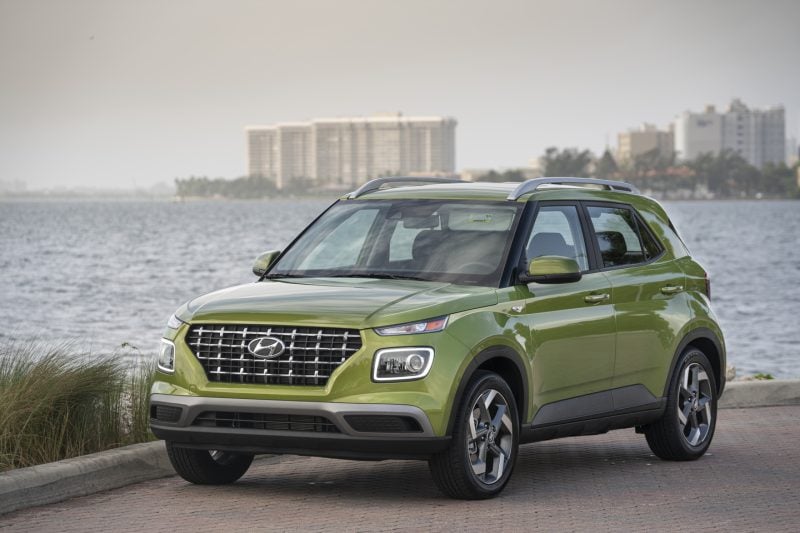
Choosing between a Hyundai Venue and a Tucson Hybrid isn’t about picking the “better” SUV. It’s about matching a vehicle to how you actually drive, day in and day out, across Alberta’s mix of city streets and open highway. Both come from the same brand, but they solve different problems: one keeps things small and efficient for city life, the other adds space, power, and standard all-wheel drive for drivers who need more from a single vehicle. Here are 10 concrete differences to help you match the right one to your routine.
Venue vs. Tucson Hybrid: Side-by-Side Specs
| Spec | Venue | Tucson Hybrid |
| Body type | Subcompact crossover SUV | Compact SUV |
| Drivetrain | FWD | AWD (HTRAC), standard |
| Engine | 1.6 L I4 | 1.6 L turbo I4 hybrid (N Line/Ultimate) |
| Horsepower | 121 hp | 231 hp combined (HEV) |
| Torque | 113 lb-ft | 271 lb-ft combined (HEV) |
| Fuel economy, combined | 7.5 L/100 km | 6.7 L/100 km (HEV) |
| Cargo, behind rear seats | 528 L | 1,097 L (HEV) |
| Cargo, seats folded | 902 L | 2,108 L (HEV) |
| Ground clearance | 170 mm | 210 mm |
| Fuel tank | 45 L | 52 L (HEV) |
| Basic warranty | 3 yr / 60,000 km | 3 yr / 60,000 km |
| Powertrain warranty | 5 yr / 100,000 km | 5 yr / 100,000 km |
1. Size That Fits the Job
The Venue’s subcompact footprint, 4,040 mm long with a 5.1 m turning radius, threads through tight parking stalls and narrow lots without much fuss. The Tucson Hybrid steps into the compact SUV class, trading some of that tightness for a cabin and cargo bay built around carrying more people and gear. A commuter parking downtown daily will appreciate the Venue’s smaller dimensions. A household hauling car seats and extra passengers on weekends will lean toward the Tucson Hybrid’s larger shell.
2. Cargo Room for Gear and Groceries
The Venue holds 528 L behind the rear seats and 902 L with them folded down, enough for a grocery run, a stroller, or a set of golf clubs. The Tucson Hybrid’s cargo area holds 1,097 L behind the rear seats and grows to 2,108 L folded, roughly double the Venue’s capacity at every stage.
Solo errands and light loads suit the Venue just fine. Hockey bags, camping gear, or a full grocery haul for a larger household call for the extra room in the Tucson Hybrid.
3. Two Very Different Engines
The Venue runs a single 1.6 L four-cylinder engine making 121 hp and 113 lb-ft, tuned for simplicity and light city driving. The Tucson Hybrid’s 1.6 L turbo hybrid system pairs a gas engine with an electric motor for 231 hp and 271 lb-ft combined, nearly double the Venue’s output. An optional plug-in hybrid on the Ultimate trim raises that further to 268 hp combined.
Drivers who want a low-maintenance engine will find the Venue’s setup straightforward. Drivers who carry more weight or merge onto highways often will feel the difference the Tucson Hybrid’s extra power makes.
4. Front-Wheel Drive vs. Standard All-Wheel Drive
Every Venue trim sends power to the front wheels through the Smartstream IVT transmission. The Tucson Hybrid comes standard with HTRAC all-wheel drive across its entire lineup, gas or hybrid. City and suburban driving on paved roads suits the Venue’s lighter FWD layout well. Gravel roads, rural routes, and unpredictable surfaces call for the traction the Tucson Hybrid’s standard AWD system is built to handle.
5. City Sipper vs. Hybrid Efficiency
The Venue posts 7.5 L/100 km combined, with 7.9 in the city and 6.9 on the highway, numbers that reflect its light weight and small engine. The Tucson Hybrid’s HEV powertrain manages 6.7 L/100 km combined, better than the Venue despite carrying standard AWD and a much more powerful engine. The Tucson’s gas-only 2.5 L option runs 8.8 L/100 km combined by comparison.
Pure city commuting keeps the Venue’s fuel costs low. Drivers covering more highway distance get the Tucson Hybrid’s electrified powertrain closing that efficiency gap while adding capability.
6. Ground Clearance and Winter Traction
The Venue sits at 170 mm of ground clearance and offers Drive Mode Select with snow, mud, and sand settings on Preferred and Ultimate trims. The Tucson Hybrid clears 210 mm, 40 mm higher, and pairs its standard AWD with the same terrain modes across its lineup. Both give drivers tools for low-traction conditions, but the Tucson Hybrid’s added clearance and AWD hardware make it the more confident option for drivers who face a lot of gravel or backroad driving.
7. Cabin Tech That Matches the Trim
The Venue runs an 8-inch touchscreen with wireless Android Auto and Apple CarPlay standard on every trim, plus a wireless charging pad from the base Essential trim up. The Tucson Hybrid steps up to a 12.3-inch display on most trims, adding navigation and a head-up display on Ultimate. Both offer wireless smartphone integration, but the Tucson Hybrid’s larger screen and added driver information tools reflect its place higher in the lineup.
8. Comfort Features That Add Up
The Venue includes heated front seats standard on every trim, with a sunroof, automatic climate control, and premium cloth reserved for Ultimate. The Tucson Hybrid extends heated seats to the rear on N Line and Ultimate, and offers a panoramic sunroof from the Preferred w/Trend package up. Buyers who want comfort features without climbing the trim ladder will find the Venue delivers more standard, sooner. Buyers who want that comfort extended to rear passengers will find the Tucson Hybrid gets there first.
9. Electrified Options for Commuters
The Venue keeps things simple with one gas engine and no electrified option. The Tucson Hybrid’s Ultimate trim offers an optional plug-in hybrid with a 13.8 kWh battery, 51 km of all-electric range, and a 7.2 kW onboard charger, on top of its standard hybrid system. Drivers who want to charge at home and cover short commutes without burning gas have that option only in the Tucson Hybrid.
10. Warranty Coverage That Travels With Either Choice
Whichever Hyundai you choose, the coverage doesn’t change. Both the Venue and Tucson Hybrid carry a 3-year/60,000 km new vehicle warranty and a 5-year/100,000 km powertrain warranty. The decision between these two comes down to size, powertrain, and drivetrain, not which one Hyundai backs more confidently.
Which Hyundai Fits Your Drive?
If most of your driving happens inside city limits, in and out of tight parking, with occasional errands and rarely more than one or two passengers, the Venue’s smaller footprint and simple gas engine keep things easy and efficient. It suits a daily commuter or a second vehicle for a household that doesn’t need extra cargo room.
If you’re regularly loading up for family trips, driving rural routes, or want standard all-wheel drive for changeable road conditions, the Tucson Hybrid’s extra cargo space, added power, and hybrid efficiency make it the more capable daily companion.
Neither is the “better” Hyundai. They’re built for different drives, and matching your routine to the right one is the decision that actually matters.
Comparing the Venue and Tucson Hybrid in Person
The Venue and Tucson Hybrid cover different parts of Hyundai’s crossover lineup: one built around a compact footprint and simple gas efficiency, the other around family space, standard all-wheel drive, and hybrid fuel savings for drivers who need more from a single vehicle.
Visit Grande Prairie Hyundai in Grande Prairie to see which layout suits your routine, ask about trim availability, and get a feel for the drivetrain that matches your commute, from downtown parking to backroad driving.