

2026 Hyundai IONIQ 5 vs 2026 Tesla Model Y: Why IONIQ 5 Is the Better EV for Alberta Drivers
2026 Hyundai IONIQ 5 vs 2026 Tesla Model Y: Why IONIQ 5 Is the Better EV for Alberta Drivers
Posted on July 8, 2026
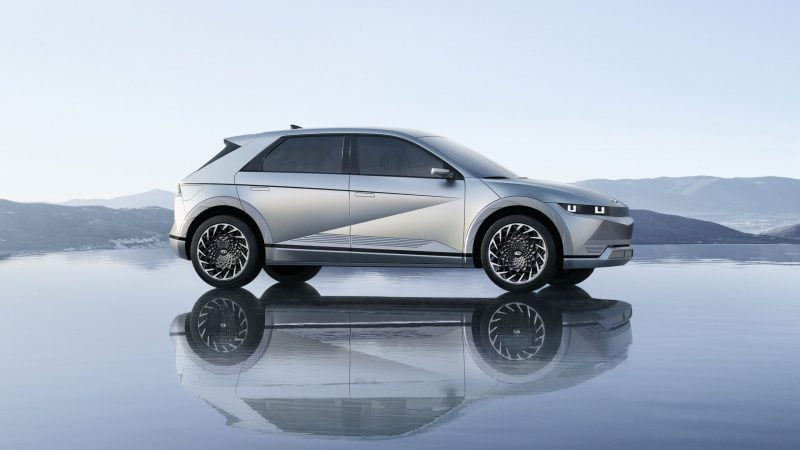
Choosing between the 2026 Hyundai IONIQ 5 and the 2026 Tesla Model Y comes down to more than a spec sheet. Both are strong electric SUVs, but they ask owners to live with the car differently every day. Alberta drivers weighing long highway stretches, cold mornings, and a five-seat family routine will notice the difference quickly.
This comparison lines the two up directly: how each charges, how the cabin feels, and how ownership plays out once the initial excitement fades.
How the IONIQ 5 and Model Y Compare
| Spec | IONIQ 5 | Model Y |
| DC fast-charge peak | 350 kW (18 min, 10–80%) | 250 kW (Premium/Performance), 175 kW (RWD) |
| Onboard Level 2 charger | 10.9 kW | 7.7 kW (RWD) |
| Range, entry RWD trim | 504 km | 463 km |
| Range, long-range/AWD trim | 463 km | 542 km (Premium Long Range AWD) |
| Basic vehicle warranty | 5 years / 100,000 km | 4 years / 80,000 km |
| Cargo, seats folded (+frunk) | 1,655 L + 24 L frunk | 2,118 L |
| 0–100 km/h, entry trim | 7.5 s | 7.2 s |
| AWD motor torque | 446 lb-ft | 389 lb-ft (Premium Long Range AWD) |
Charging Speed and Everyday Convenience
The IONIQ 5’s biggest advantage shows up at a charging station. Its 800-volt architecture supports DC fast charging up to 350 kW, taking the battery from 10 to 80 percent in about 18 minutes. That’s a real number, not a marketing claim, and it tops the Model Y’s Supercharging peak of 250 kW on Premium and Performance trims, or 175 kW on the base Rear-Wheel Drive car.
At home, the IONIQ 5’s 10.9 kW onboard charger fills the battery in about 7 hours 20 minutes on a Level 2 charger, faster than the Model Y RWD’s 7.7 kW onboard charger. The IONIQ 5’s NACS charge port ships with CCS adapters included, so it plugs into either charging standard without buying extra hardware later.
Cabin Space and Everyday Practicality
The IONIQ 5’s second-row seats slide and recline, and the cabin includes rear air vents with dual-zone automatic climate control, giving rear passengers their own comfort adjustments. Rear legroom measures 1,002 mm, with a 24 L front trunk adding dedicated storage separate from the main cargo area.
The Model Y offers more outright cargo volume with the second row folded, 2,118 L against the IONIQ 5’s 1,655 L plus its 24 L frunk. But the IONIQ 5’s sliding, reclining rear bench and illuminated cargo hooks give it a flexibility Tesla’s single folding bench doesn’t match for gear that needs to stay upright, like coolers or plants.
Design, Technology, and the Ownership Experience
The IONIQ 5 pairs a 12.3-inch infotainment touchscreen with a separate 12.3-inch digital instrument cluster, both running wireless Apple CarPlay and Android Auto. The Model Y’s 16-inch centre touchscreen is larger than either single IONIQ 5 display, but it also carries vehicle controls that live nowhere else in the cabin. The IONIQ 5 keeps speed and range readouts on their own dedicated screen, directly ahead of the driver instead of sharing one central surface.
Tesla offers its supervised self-driving software as an ongoing subscription add-on. The IONIQ 5’s Highway Driving Assist and forward collision-avoidance systems come built into the vehicle’s standard equipment across the Preferred Long Range lineup, with no recurring software fee attached to the safety systems already on board.
Ownership plays out differently too. Hyundai vehicles are sold and serviced through a dealership network, meaning financing, warranty claims, and service appointments run through a local team a buyer can walk into. The IONIQ 5’s 5-year/100,000 km New Vehicle Warranty also runs longer than the Model Y’s 4-year/80,000 km Basic Vehicle Limited Warranty.
Powertrain, Range, and Winter Confidence
In its entry Rear-Wheel Drive form, the IONIQ 5 makes 225 hp and 258 lb-ft, with a 504 km range that beats the Model Y RWD’s 463 km. Stepping up to Dual Motor AWD, the IONIQ 5 makes 320 hp and 446 lb-ft, more torque than the Model Y’s Premium Long Range AWD figure of 389 lb-ft, though the Model Y’s rated range climbs higher at 542 km in that configuration.
The Model Y’s higher rated range in that one AWD comparison doesn’t tell the whole story. The IONIQ 5 answers with faster public charging, a quicker home refill, and more low-end torque, so the day-to-day gap closes well before a road trip is over, making the IONIQ 5 the stronger choice for how most drivers actually cover distance.
Every IONIQ 5 in the Preferred Long Range lineup includes a heat pump with battery heating and preconditioning, warming the battery ahead of a fast-charging stop so cold Alberta mornings don’t stretch out charging times.
Why the IONIQ 5 Fits Alberta Drivers
Families hauling gear on weekend trips get a cabin that adjusts around them, with sliding rear seats and a dedicated frunk for items that shouldn’t roll around the main cargo area. Commuters plugging in overnight benefit from the faster 10.9 kW onboard charger, and long-distance drivers gain real minutes back at a 350 kW public charger.
Buyers who want dealership-backed service, a five-year basic warranty, and safety systems that come standard rather than behind a subscription will find the IONIQ 5’s ownership model more familiar. That combination of faster charging, a more flexible cabin, and a warranty that runs longer covers how most Alberta drivers actually use an electric SUV.
Test-Driving the IONIQ 5 at Grande Prairie Hyundai
The 2026 IONIQ 5 pairs 350 kW ultra-fast charging with a flexible, lounge-style cabin and a dealership-backed ownership model built around a longer basic warranty. Its charging speed and rear-seat comfort stand out against the Model Y in daily use.
Visit Grande Prairie Hyundai in Grande Prairie to sit inside the IONIQ 5, check its cabin layout in person, and see how its charging setup fits your routine.